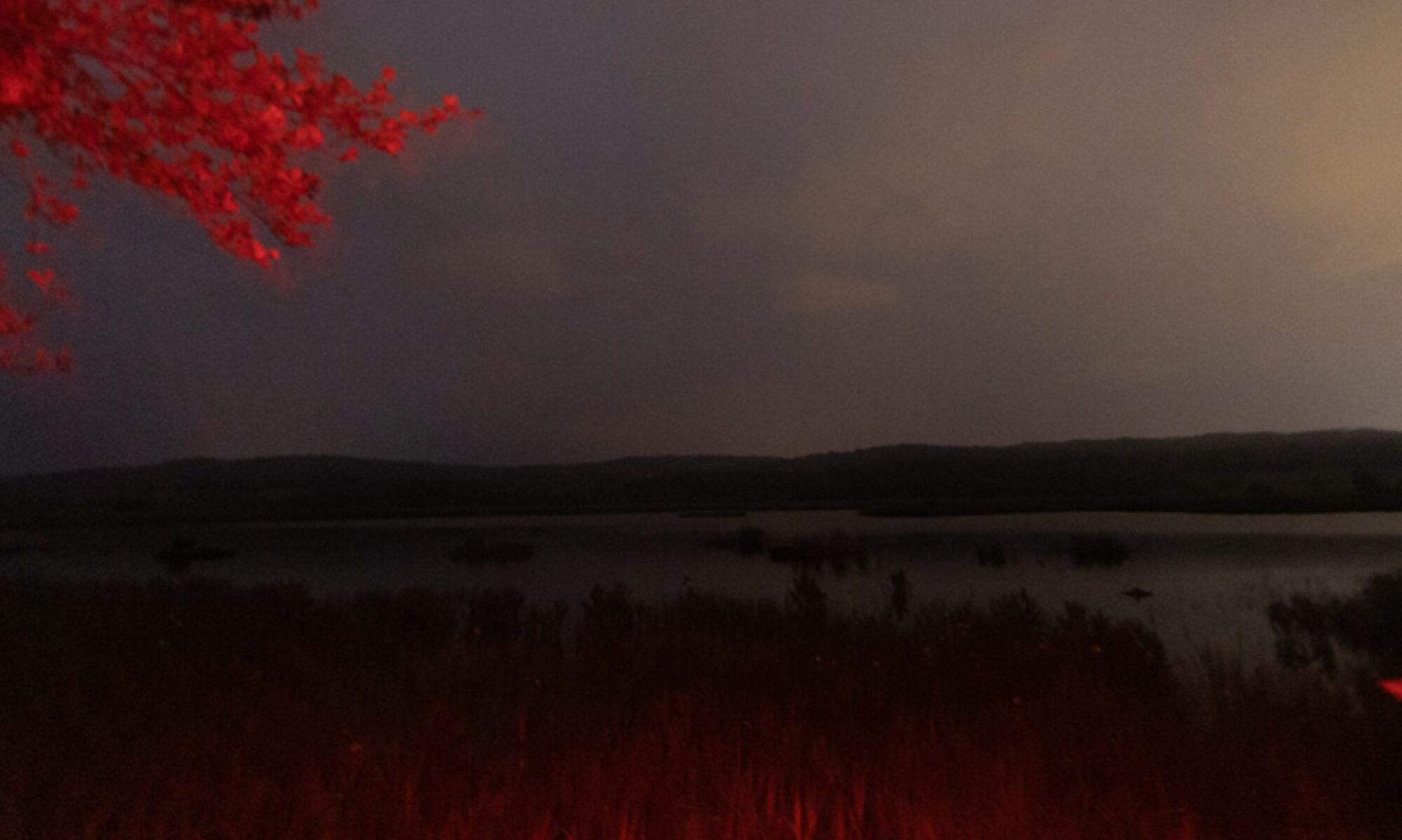
Dark Skies Luminous Nights
The rhythms of ecologies, environments and bodies (human and non-human alike) are driven by the movement of the earth around the sun. The earth’s daily rotation on its axis and its annual orbit of the sun act as a timepiece that is used by most life on earth to orchestrate biologies, behaviour and life cycle events. Through the use of artificial light, humans have, to some small extent, freed themselves from the natural cycles of light and dark. In doing so, we have also disturbed ecologies, bird migrations, sleep patterns, health, and more. Meanwhile, we have become so accustomed to light at night that we barely notice its presence – in fact, we are more likely to notice its absence. It seems that light reassures us, while darkness is often associated with feelings of discomfort, perhaps fear.
The Dark Skies Luminous Nights project seeks to augment this perception of darkness, highlighting the importance of both light and dark and their changing rhythms to human and non-human life. It asks whether darkness has been diminished both as a condition and an idea and whether we should do something about this.
Using light sensors contained within translucent eggs and fruits around the reserve and an all-sky astronomical camera, the project collects information about the light from the sky and surrounding and environment. This information is sent to a timepiece that shows the passage of time according to light—not only the changing illumination from the sun and moon but also artificial light at night. This is an experience of time that we share with birds, plants, animals and insects, and is quite different in nature from the neat precision of the hours, minutes and seconds that we read as a numbers on a digital watch or the movement of hands on a dial. The time measured out by environmental light is nuanced, changing according to the weather, the passage through day and night, the movement of the moon, the changing seasons and latitude, as well as the rhythms and syncopations of artificial light at night. Dark Skies Luminous Nights aims to show time as an environmental phenomenon. It asks how taking such a view of time might positively impact our attitudes, knowledge, and behaviours towards the environment and how we affect it through, for example, excessive lighting.
Here is an visual overview of the research and development process.


